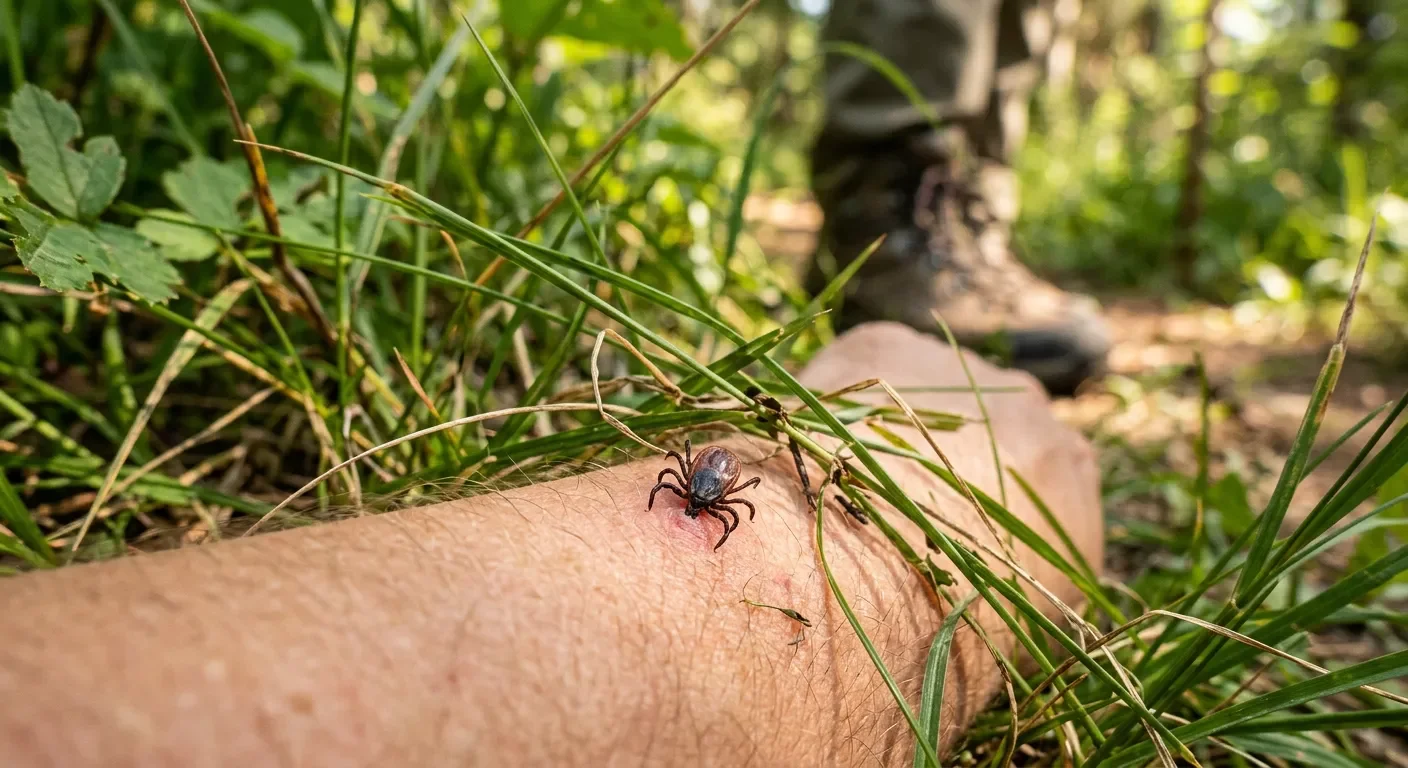
Tick bites are at their highest level in years. Here's what you actually need to know.

Tick bites are at their highest level in years. Here's what you actually need to know.

CDC data shows ER visits for tick bites hit their highest levels for this time of year since 2017 in April 2026. This article breaks down which diseases ticks can actually transmit (including the scary one that transfers in minutes), what symptoms to watch for, and a practical checklist for preventing bites and removing ticks correctly.
Gen Z Health Daily
12/6/2026 · 23:11
5 suscripciones · 8 contenidos
Tick bites in the US hit their highest levels for this time of year since 2017 in April 2026. That number is only going to climb through July. Here's what ticks can actually do to you — and what actually works to stop them.

The numbers are real

Emergency room visits for tick bites are running more than double the historical seasonal average right now. According to CDC's Tick Bite Tracker, in April 2026, roughly 71 out of every 100,000 ER visits were for tick bites — compared to a historical average of about 30 per 100,000. 1 In all regions of the country except the South Central, rates are the highest they've been for this time of year since 2017.
Cargando tarjeta de estadísticas…
The Northeast is getting hit hardest. Researchers at Binghamton University's Tick-Borne Disease Center have found that 50–60% of ticks in parts of New York now carry Lyme disease bacteria — and tick populations are "spreading like wildfire," particularly in the Northeast and Upper Midwest, where 95% of US cases occur. 2

Why it's getting worse every year

Two words: warmer winters.
Ticks aren't active when it's freezing. More mild winters mean more days per year when ticks can feed, reproduce, and hitch rides into new territory. The blacklegged tick — the one that carries Lyme — has expanded its range dramatically over the past three decades, now pushing into the Ohio River Valley and spreading south. 3
White-tailed deer and white-footed mice are the main hosts for blacklegged ticks, and both populations are doing well in expanding suburban and semi-rural areas. More deer + more suitable habitat = more ticks crawling through the grass you're about to sit in.
The lone star tick is also moving north from the Southeast, bringing its own set of diseases to regions where doctors may not be thinking about them yet.

What a tick can actually give you

Not every tick bite makes you sick. In low-risk areas, fewer than 1% of ticks carry Lyme bacteria. In high-risk areas like parts of New England, that can be as high as half. 4 But ticks can carry more than Lyme, and some of the others are nastier.
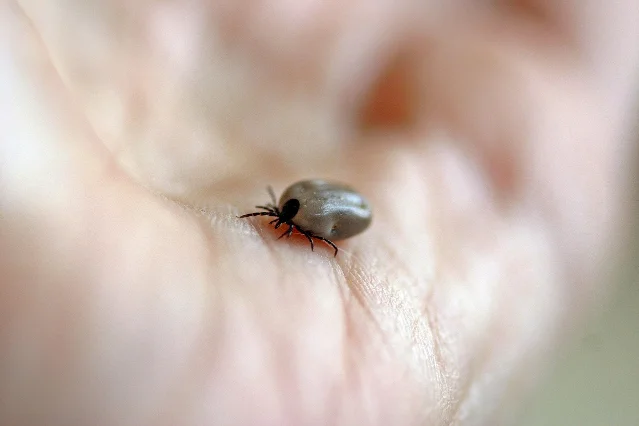
Close-up of a deer tick (Ixodes ricinus) — the species responsible for Lyme disease transmission in the US Northeast
An Ixodes ricinus tick. These can be smaller than a sesame seed — they often attach without you noticing. 4
Lyme disease is caused by Borrelia burgdorferi bacteria and is spread by blacklegged ticks (also called deer ticks). If caught early, it's treated with a two-to-three-week course of antibiotics. Untreated, it can cause joint pain, heart problems, and neurological symptoms that stick around for months or years.
Anaplasmosis and ehrlichiosis are bacterial infections that cause flu-like symptoms — fever, chills, muscle aches — and can be serious if untreated. Both respond to doxycycline.
Rocky Mountain spotted fever (RMSF) sounds regional but isn't. It's one of the most dangerous tick-borne diseases in the US. A spotted rash usually appears a few days in, but not always. It requires prompt treatment — delays can be fatal.
Alpha-gal syndrome is the weird one. A bite from a lone star tick can trigger a delayed allergic reaction to red meat and some dairy products — sometimes hours after eating. In rare cases, people have gone into anaphylaxis. 3 This one is worth knowing about because it can develop even after a single bite you barely noticed.
Powassan virus is the one that keeps infectious disease doctors up at night. It's transmitted by the same blacklegged tick as Lyme, but unlike Lyme, it can pass from tick to human in as little as 15 minutes of attachment. 5 It can cause severe brain inflammation (encephalitis). The fatality rate is roughly 10–15%, and more than half of survivors have lasting neurological effects. There's no treatment — only supportive care. It's still rare, but it's expanding with the blacklegged tick's range.

Symptoms to watch for

The classic Lyme symptom is the bull's-eye rash — a circular red rash that expands outward from the bite, looking like a target. It shows up in about 70–80% of Lyme cases, typically within 3–30 days. The other 20–30% of people never see a rash and might only get flu-like symptoms: fatigue, fever, headache, joint pain.
The problem is that many tick-borne illnesses look like the flu in the early stages. If you've been in a tick-heavy area and develop fever, chills, body aches, or headache within a few weeks — that's enough reason to tell a doctor you may have had tick exposure.

How to actually not get bitten

There's no vaccine for Lyme disease — one has been in development for years, but nothing is approved in the US yet. So prevention is the whole game.
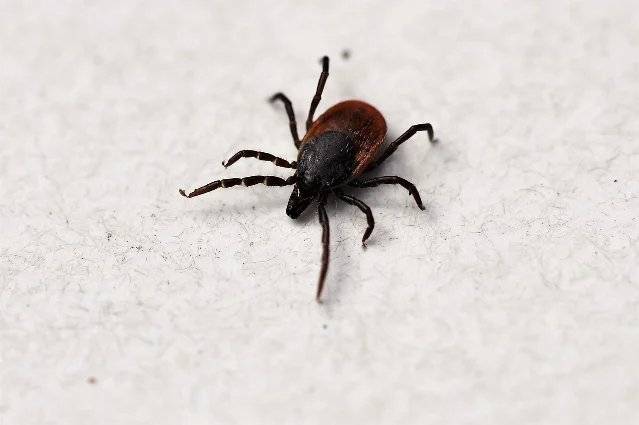
A tick on a wooden surface, highlighting how small and easy to miss these parasites are before they attach
That's roughly how big one looks before it feeds — smaller than a watermelon seed. 2
Repellents that work:
  • DEET (20–30% concentration) on exposed skin. The EPA-registered standard. Works for hours.
  • Picaridin is a solid DEET alternative — similar effectiveness, less greasy feel.
  • Permethrin on clothes (not skin) is one of the most effective options. Spray your hiking clothes, let them dry, and a single application lasts multiple washes. Kills ticks on contact. 2
In tick territory:
  • Wear long sleeves and pants. Tuck pants into socks if you're going into actual brush or tall grass — looks goofy, works well.
  • Wear light-colored clothing so ticks are easier to spot.
  • Stay on trails. Ticks hang out on grass blades and leaves with their legs outstretched, waiting to grab onto something walking past. They don't jump or fly. Stay in the middle of the path.
  • Check your gear and pets before going inside. Dogs pick up ticks and bring them indoors.
After you come in:
  • Shower within two hours of being outdoors. An unattached tick can be washed off before it bites.
  • Do a full-body tick check. Ticks prefer warm, hidden spots: scalp, behind ears, armpits, groin, behind knees, belly button. Use a mirror or ask someone.
  • Throw your outdoor clothes in the dryer on high heat for 20 minutes. Ticks can survive the washing machine, but they can't survive the dryer. 2

You found a tick. Here's what to do.

Don't panic, but don't delay.
How to remove it:
  1. Use fine-tipped tweezers (or a tick removal tool). Grab the tick as close to the skin surface as possible.
  2. Pull upward with steady, even pressure. Don't twist or jerk — that can leave mouthparts in the skin.
  3. Clean the bite area with rubbing alcohol or soap and water.
  4. Do not use petroleum jelly, heat, or nail polish to try to get it to detach. These don't work and may cause the tick to release fluids into the wound.
Timing matters. For Lyme disease, the tick typically needs to be attached for 24 to 36 hours to transmit the bacteria. Getting it off quickly — within a day — significantly reduces your risk. 5 For Powassan virus, however, there is no such window — transmission can happen in minutes. This is why not getting bitten matters more than speed of removal for that particular virus.
Save the tick in a sealed bag if you want to have it tested later (some county health departments offer this). Note the date.

When to actually see a doctor

Go if:
  • You develop a rash within 30 days of a bite — especially anything that looks like a bull's-eye or expanding red oval
  • You get flu symptoms (fever, chills, body aches, headache) within 2–3 weeks of possible tick exposure
  • The bite area shows signs of infection (increasing redness, warmth, swelling beyond a small bump)
  • You removed a tick that appeared engorged (meaning it had been feeding for a while)
You don't need to go to the ER for a tick bite by itself. Remove it, watch for symptoms, and call your primary care doctor if anything develops. The main thing to avoid is dismissing symptoms as "just a summer cold" if you've had recent tick exposure.
Track tick activity in your area at the CDC Tick Bite Tracker — updated weekly.

Añade más opiniones o contexto en torno a este contenido.

  • Inicia sesión para comentar.