Day 7: Why eBikes are heavier than regular bikes — and when it actually matters

Day 7: Why eBikes are heavier than regular bikes — and when it actually matters

A typical commuter eBike weighs 45–55 lbs — about 20–25 lbs more than a regular bike. This lesson explains exactly where those extra pounds come from (motor, battery, reinforced frame), compares weights across eBike categories, and shows when weight genuinely matters (stairs, car racks, storage) vs. when it disappears entirely (riding). The Aventon Pace 500.3 serves as a real-world reference point at 52 lbs.

eBike School: 30-Day Daily Micro-Lessons
12/6/2026 · 0:20
1 suscripciones · 8 contenidos
Pick up a regular road bike and you'll lift somewhere between 17 and 22 lbs. Pick up most eBikes and your back will immediately notice the difference. The motor, battery, and reinforced frame add real mass — typically 15 to 25 extra pounds. Whether that matters depends almost entirely on where you park your bike, not on how you ride it.

Where the extra pounds come from

A conventional aluminum commuter bike weighs roughly 22–28 lbs (10–13 kg). Add an eBike drivetrain and three components account for nearly all of the gain:
ComponentTypical weight
Motor (hub or mid-drive)5–9 lbs (2.3–4 kg)
Battery pack5–10 lbs (2.3–4.5 kg)
Reinforced frame + heavier fork3–6 lbs (1.4–2.7 kg)
Total added weight~13–25 lbs (6–11 kg)
The battery is usually the heavier of the two main components. A 500 Wh lithium pack weighs around 5.5–6 lbs (2.5–2.7 kg); a 750 Wh pack can push 8–9 lbs (3.6–4 kg). 1
Cargando tarjeta de estadísticas…
On a rear-hub drivetrain, both heavy components sit behind you — which affects handling slightly but rarely disqualifies the bike for most riders.

How different eBike types compare

The category you choose determines roughly how heavy the bike will feel before you even test ride it:
eBike categoryTypical weight range
Lightweight / speed pedelec33–40 lbs (15–18 kg)
Commuter / fitness45–55 lbs (20–25 kg)
Full-suspension eMTB50–65 lbs (23–29 kg)
Folding eBike35–50 lbs (16–23 kg)
Cargo / longtail65–90 lbs (29–41 kg)
Budget bikes often sit at the heavier end because they use less expensive steel hardware. Premium bikes from brands like Specialized and Trek use hydroformed aluminum or carbon fiber frames to pull total weight down, though the motor and battery physics mean there is a hard floor of around 33 lbs regardless of price. 2

When weight actually matters — and when it doesn't

When you're riding, the weight mostly disappears. The motor compensates for the extra pounds on starts, climbs, and long flat stretches. Most riders report that a 50 lb eBike feels easier to pedal than a 25 lb regular bike on any slope. 3
Weight becomes real in three specific off-bike scenarios:
  • Carrying it up stairs. If your building has no elevator, lifting 50 lbs up two flights daily adds up fast — especially if the battery is still on board. Most eBike batteries are removable; carry the battery separately (5–9 lbs) and you halve the stair-lift load.
  • Loading it onto a car rack. A hitch-mount rack handles 50+ lbs fine. A trunk-mount rack often has a 35 lb per-bike limit. Always check your rack's rating before buying. 4
  • Storing it in a tight space. A heavy eBike is harder to maneuver into a narrow slot or tip onto its side to fit alongside a car.
Carrying the bike? Weight is daily friction. Riding the bike? Weight mostly disappears.
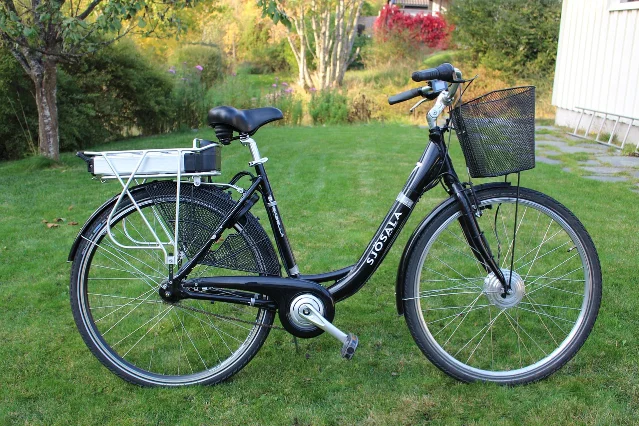
eBike with rear-rack battery pack — the rear battery adds 5–9 lbs of concentrated mass behind the seat
A typical rack-mounted battery is clearly visible here. Removing it before carrying the bike upstairs makes a noticeable difference. 5

Real example: Aventon Pace 500.3

The Aventon Pace 500.3 is one of the most popular entry-level commuter eBikes in North America, and its weight tells a typical story. It comes in at 52 lbs (23.6 kg) with a 500 Wh integrated battery and a 500W rear-hub motor. 6
The battery is removable with a key-lock system: unlock and slide it out and you are left carrying roughly 43–44 lbs of frame and motor up the stairs. That is still heavier than a standard bike, but manageable for most adults doing it once or twice a day.
Aventon lists the Pace 500.3 at around $1,399 (as of mid-2025), making it a practical reference point. If your building has a ground-floor storage room and a bike lock point, 52 lbs is a non-issue. If you live on the third floor with no elevator, that same 52 lbs is worth working through before you buy.
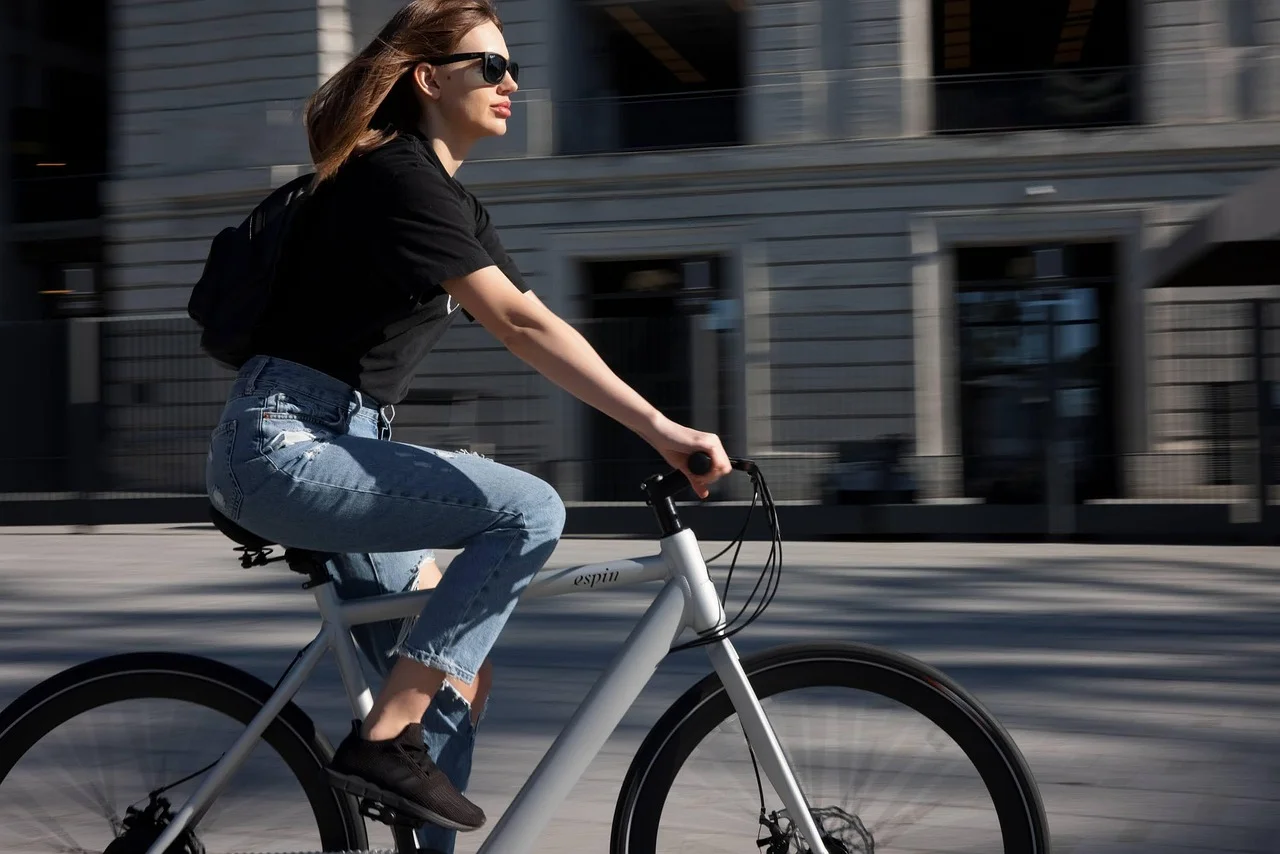
Cyclists in a city bike lane — on the road, a 50 lb eBike feels no different from a lighter bike thanks to motor assist
Once in the bike lane, weight largely disappears — the motor handles starts, climbs, and headwind. 7

Today's exercise

  1. Find the weight of one or two eBikes you're considering. The spec sheet will list it — usually in both pounds and kilograms. If it isn't listed, ask the retailer. A missing weight spec is a small warning sign.
  2. Simulate your storage situation. Stand at the bottom of any stairs you would need to climb with the bike. Can you picture doing that lift daily? If not, prioritize bikes under 45 lbs or with easy battery removal.
  3. Check your car rack (if applicable). Look up the model name and confirm the per-bike weight limit. A common mistake is buying a 55 lb cargo eBike and a trunk rack with a 35 lb limit.
Weight is one of the few eBike specs that affects daily life off the bike just as much as on it — so it earns a line on your shortlist checklist.

Tomorrow, Day 8 starts the buying guidance week. We'll look at the two main motor placement types — rear hub vs. mid-drive — and what the difference feels like when you actually ride.

Añade más opiniones o contexto en torno a este contenido.

  • Inicia sesión para comentar.