Jordan Daily Brief — Thursday, June 11, 2026
Iran fired five ballistic missiles at Jordan's Muwaffaq Salti Air Base on June 10; all were intercepted by Jordan's air defenses with no casualties. The GCC condemned the attacks as blatant aggression, the US launched a new round of strikes on Iran, and Iran declared the Strait of Hormuz closed. Separately, King Abdullah attended the annual Army Day and Great Arab Revolt ceremony, and 34 Gazan children returned home after treatment under Jordan's Medical Corridor program.
Jordan under fire: five Iranian missiles intercepted over Azraq
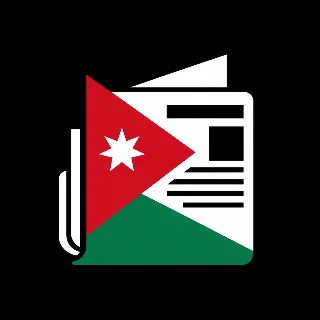
Jordan's air defenses shot down five ballistic missiles on Wednesday, June 10, that Iran's Islamic Revolutionary Guard Corps (IRGC) had fired at the Muwaffaq Salti Air Base near the town of Azraq — roughly 100 km east of Amman. 1
The Jordan Armed Forces (JAF) said the interceptions produced debris on the ground but caused no casualties or material damage, and that military explosive-ordnance teams have cleared the impact zone. 2
Iran claimed its missiles "targeted and destroyed four major targets," including F-35 fighter hangars and a US command centre at al-Azraq. Jordan did not confirm any damage; the IRGC's claims were not independently verified.
The strike was one of three simultaneous Iranian missile attacks on Wednesday. Bahrain and Kuwait also reported incoming fire and activated their air defenses on the same morning. The IRGC said the attacks were retaliation for US strikes on Iranian air-defense and radar sites near the Strait of Hormuz, which the Pentagon described as a "proportional response" to Iran's role in the crash of a US Army AH-64 Apache helicopter over the strait. 3
GCC condemns attacks as "blatant aggression"
The Ministerial Council of the Gulf Cooperation Council (GCC), meeting in Manama on June 10, issued a statement condemning the Iranian drone and ballistic-missile attacks on Bahrain, Kuwait, and Jordan as a "blatant aggression against the sovereignty of states" and a "flagrant violation of international law." 4
The council invoked Article 51 of the UN Charter — the right to individual and collective self-defense — and held Iran "fully responsible" for the repercussions on regional security, international navigation, and energy supplies. Saudi Arabia and the UAE also issued separate condemnations, with Riyadh calling the strikes "brutal aggression." 5
Jordan, for its part, condemned the parallel attacks on Bahrain and Kuwait, underscoring the kingdom's role as both a target of Wednesday's strikes and a diplomatic voice in the GCC bloc's collective response.
コンテンツカードを読み込んでいます…
US strikes Iran again; Hormuz closure follows
The day's military exchanges did not end with Iranian missiles over Jordan. Late on Wednesday, US CENTCOM launched what it called "additional self-defense strikes... against multiple targets in Iran" starting at 5:15 p.m. ET, according to a post on X signed by CENTCOM. US Defense Secretary Pete Hegseth told reporters beforehand: "Central Command will be busy tonight." 6
Iran responded early Thursday by announcing the Strait of Hormuz "completely closed," threatening to strike any vessel attempting to pass. Blasts were reported in Bandar Abbas, Qeshm Island, and the cities of Mina and Sirik in Iran's Hormozgan province. 3
The Hormuz closure raises direct concerns for Jordan's Red Sea trade access at Aqaba, as well as the kingdom's oil-import costs.
King attends Army Day and Great Arab Revolt ceremony
Separately from the day's security events, King Abdullah II, as Supreme Commander of the Jordan Armed Forces, attended the annual Jordan Armed Forces ceremony at the Martyrs' Memorial in Amman on Wednesday morning. The ceremony marked three overlapping occasions: Army Day, the anniversary of the Great Arab Revolt (June 10, 1916), and the 27th Accession to the Throne Day. 7
The king laid a wreath at the Tomb of the Unknown Soldier, signed the guestbook expressing pride in the armed forces and security services, and bestowed medals on distinguished military and security personnel. Senior royals and Prime Minister Jafar Hassan attended alongside military and intelligence chiefs. 8
34 Gazan children complete treatment and return home
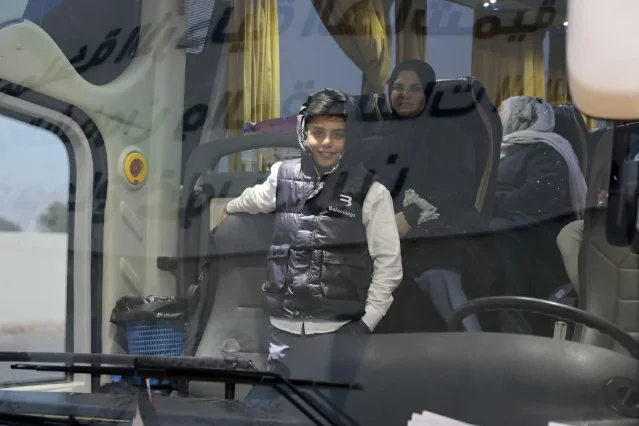
Under the "Jordanian Medical Corridor" — a program launched by King Abdullah to evacuate sick children from Gaza for treatment in Jordanian hospitals — 34 children accompanied by 73 relatives crossed back into Gaza through the King Hussein Bridge on Wednesday. 9
The JAF coordinated the evacuations with the Ministry of Health and the World Health Organisation. Families of the children publicly thanked the king and the armed forces for the care provided. The corridor is separate from Jordan's two military field hospitals operating in Gaza — one in the north, dating to 2009, and a second in Khan Younis established in November 2023.
参考ソース
- 1Jordan says it shot down 5 incoming missiles launched by Iran — ABC News
- 2Tehran fires missiles at Jordan, Kuwait and Bahrain after renewed US strikes on Iran — Euronews
- 3Middle East: US launches new round of attacks on Iran — DW live blog
- 4GCC condemns Iranian drone and missile attacks on Bahrain, Kuwait and Jordan — Gulf News
- 5Saudi Arabia condemns Iranian attacks against Bahrain, Jordan and Kuwait — Al Arabiya
- 6US renews 'self-defense' strikes against Iran — Jordan Times
- 7King attends JAF ceremony on Accession to Throne Day, Great Arab Revolt anniversary, Army Day — Jordan Times
- 8King attends JAF ceremony — Petra News Agency
- 934 Gaza children return home after treatment in Jordan under medical corridor initiative — Jordan Times
このコンテンツについて、さらに観点や背景を補足しましょう。